
Q&A with Anna Maskiell
I recently sat down with Anna Maskiell, CoFounder and Principal Architect at Public Realm Lab.
When I first met Anna and Phil over Teams (the other CoFounder at PRL), I was immediately captivated by their camaraderie, their innate curiosity, and the way in which they challenged typical design thinking. I remember how I felt after the conversation, energised and inspired. It was no different when I met with Anna in person.
Q: Coffee order
Anna: First coffee of the day is a double shot flat white, thereafter a single shot or affogato. I try to max out at two.
Q: Favourite lunch spot in Melbourne
Anna: Rudi (Rudimentary, in Footscray) is a great work day lunch and then Sebastian on the beach in Williamstown is our go to, cause the kids can run headless up and down the beach.
Q: When you co-founded Public Realm Lab what was your main mission and has it evolved overtime?
Anna: It hasn’t particularly evolved, our main mission was to see if it was possible to create a practice that focused on space as a kind of container and facilitator for human behaviour – and we have done that, amazingly. I wasn’t sure that we would be able to create a practice and carve out a space to do that work, but we have. So I guess what’s evolved is the confidence that its actually something that’s required within the Australian design community.
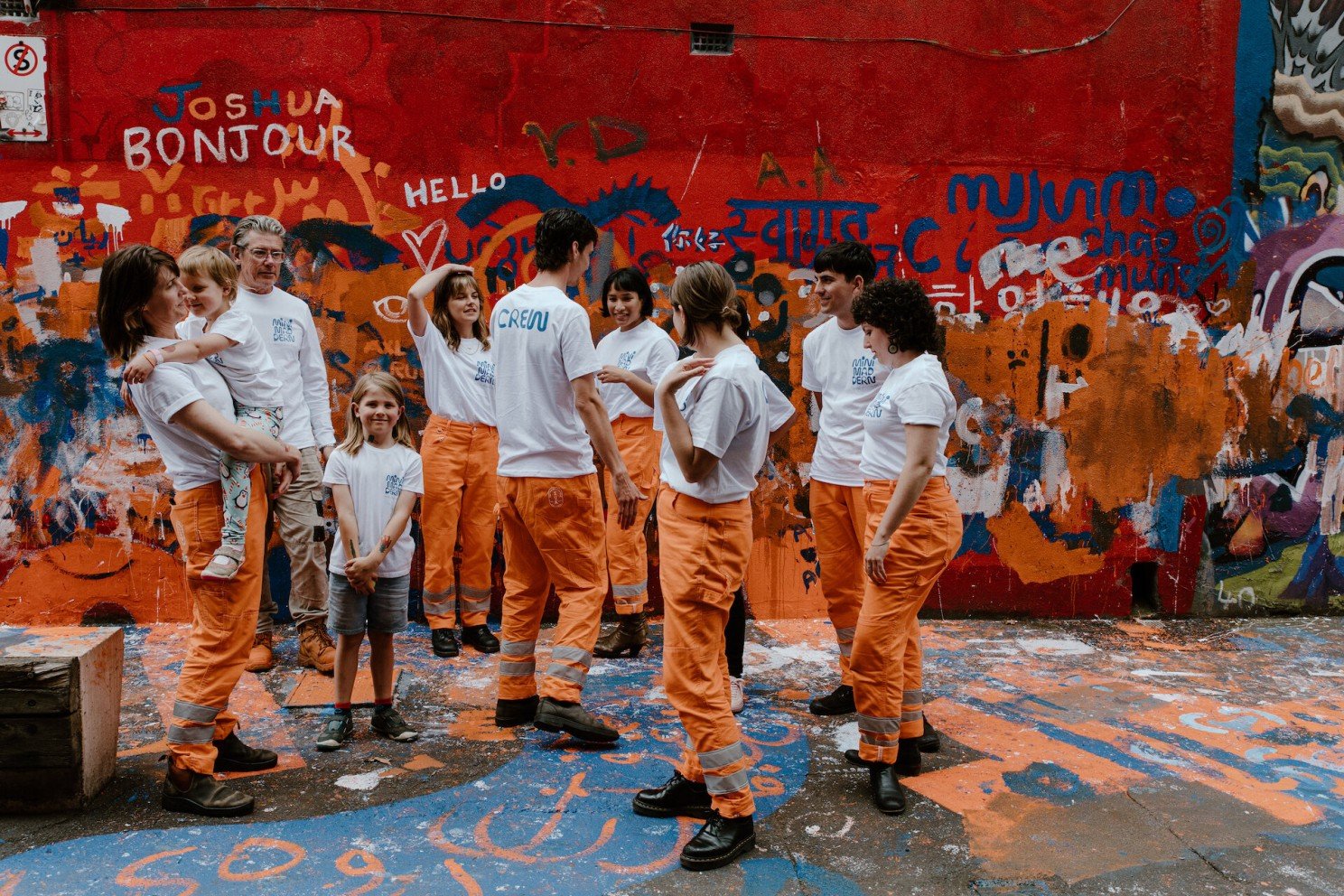
The team at Public Realm Lab
Q: Do you feel like more practices are focusing on that mission or there is still a bit of learning and appreciation for it.
A: I think clients are probably focusing on it more and that’s what is triggering architectural practices’ interest. I guess the unique thing about our practice within Australia is that we do design advocacy and consulting as well as the delivery of buildings, and that’s a completely unique perspective to have. So, we write design frameworks and guidelines and then actually create buildings within those guidelines or work with other architects to help them adopt them.
Q: What intrigues you the most about human behaviour?
A: I think the thing that astounds me the most is that we think we are rigid and fixed, and that we move through life and that nothing sort of impacts us, or that we’re conscious of what does impact us. And the more neuroscience and also deep ecology that I look at, the more obvious it is - which of course traditional cultures know - that we’re a part of a web; part of an ecosystem, and we’re constantly receiving cues unconsciously from our built environment that we don’t register and then we constantly become new versions of ourselves through those interactions. Which to me, is phenomenal and it just foregrounds how critical the built environment is.
Q: What would be your favourite place in the world? And why?
A: Mine is probably a favourite place but also a time because I’m not sure it exists like that anymore, which is probably Guangzhou in the Pearl River Delta in 2000s. I ran away from Brisbane at the time to South China and it just blew my mind in terms of urbanity I guess. I’d been to Europe but this kind of mega urbanism and understanding then for the first time, how much space and occupation of space is cultural and political.
Q: What is your proudest achievement?
A: It’s going to sound clichéd but creating a practice at the same time as creating a family which is huge and challenging, but mutually reinforcing. When you’re leaving your little babies in someone else’s care, its good to know that you’re going and doing something that you believe in. That you’re away from them for a really good reason.
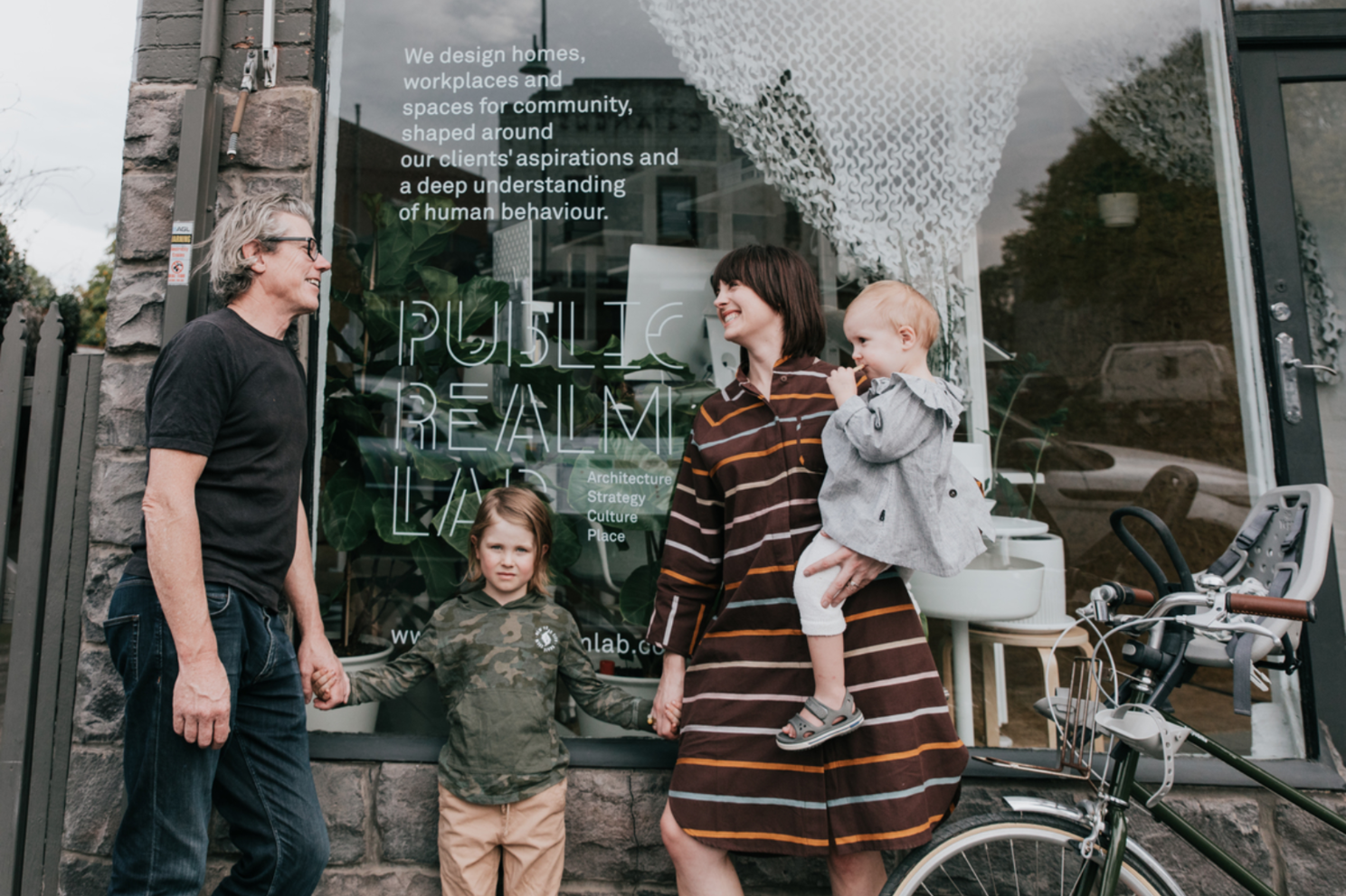
Anna Maskiell, Phil Ward and their family.
Q: What advice would you give your younger self.
A: I’d probably steal some advice from a good friend of mine, Sydney Architect Shaun Carter, which is ‘don’t let perfect be the enemy of good’. I think that’s really wise and I think often, and particularly at the start of your career, you want everything to be perfect, you know, you want every part of the project to be perfect and it has to be a container for all of the ideas. And then I guess the benefit of getting a bit more experience is that you realise it’s a long game and that really good, contextual, ethical responses is enough sometimes.
And I think it goes back to values and culture as well. I think Australia is so far down the capitalist machine end, we want everything to be shiny, perfect and new. And I think actually stepping back and accepting that its part of a much bigger and longer game plan, a much longer, longer, longer game plan, and an understanding that it’s just about one small grain of rice on top of a mountain of rice in a way. It just has to be a small contribution; it doesn’t always have to be world changing.
The Common Thread:
The common thread for me and something I think most of us can all relate to, is the notion of not letting the perfect be the enemy of the good. In architecture, and I assume other creative industries, perfectionism seems to exist at some level. Recently I’ve come to terms with the fact that things don’t always have to be perfect - and in fact, any thoughtful and considered decision will have meaningful impact. We all have the ability to influence at any scale, it’s a matter of reminding ourselves that the small wins count too and they all contribute to the greater outcome (which I can only assume is changing the world.)